Perspectives: DSWR data — a modeler’s dream to drive improvements
November 10, 2025
A conversation with Cara Mathers, research soil scientist at the Soil Health Institute
Data collected in the DSWR project is helping farmers make confident decisions about sustainable field practices and driving improvements in modeling for soil carbon, greenhouse gas flux and hydrology.
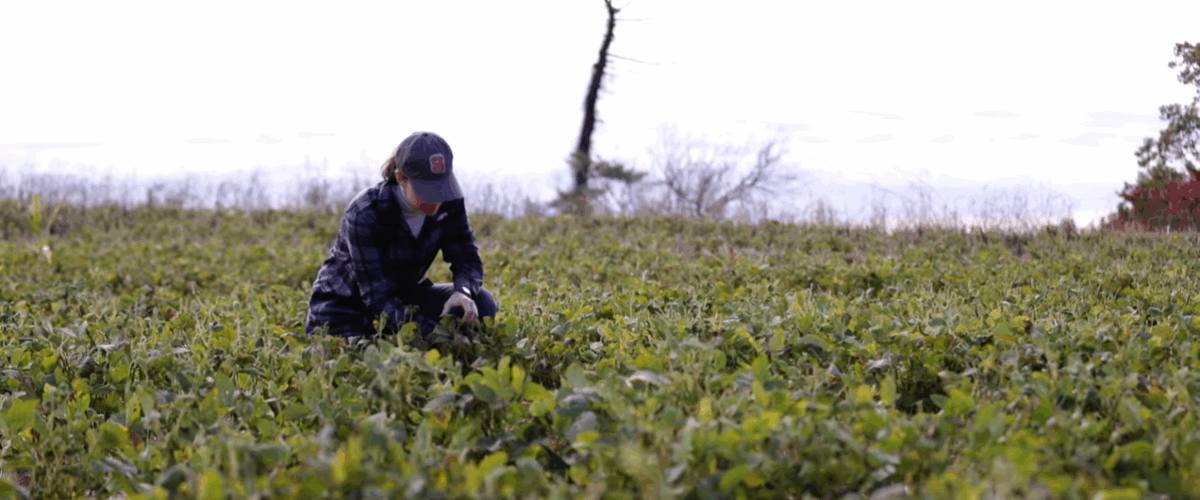
Cara Mathers, a research soil scientist at the Soil Health Institute (SHI), a key partner in DSWR, shared insights into the modeling effort.
Why do we need models?
Physical measurements are the gold standard of ecosystem service quantification, but we can’t measure every outcome of interest on every field in every year. Decision support tools, and the models that drive them, allow us to reasonably estimate the impact of agricultural management changes on soil carbon sequestration, greenhouse gas fluxes and water quality. However, models are only as good as the data that inform them. For heavily manured dairy silage systems specifically, data is lacking that would allow robust calibration of models.
How is DSWR contributing to this effort?
Data collected from the DSWR project is being used to drive model improvements. For the past five years, soil samples and gas flux measurements have been collected from large-plot and field-scale trials in major dairy regions across the U.S. The data collected from these locations represents a modeler’s dream dataset: robust measurements of soil properties collected at multiple time points, coupled with thoroughly documented management information.
Running simulations with this data will enable us to 1) determine how well the models are currently performing and 2) begin the work of pinpointing where model improvements may be made. Changes may be as simple as updating the values of specific model parameters through calibration, or as complex as adding entirely new functions into model subroutines.
Scientists at SHI are collaborating with Field to Market (FtM) and modelers at Colorado State University to begin testing the Soil and Water Assessment Tool (SWAT) using DSWR data. SWAT is an open-source, process-based model that can quantify field-scale or regional hydrology and biogeochemistry. FtM employs the restructured version of the model, SWAT+, within their Fieldprint Calculator for carbon stock quantification.
What has been found thus far?
Initial simulations have been run for conventional and soil health management treatments at a large-plot trial and a field-scale trial in Wisconsin. Both sites contain well-drained and poorly drained soil types, allowing us to also interpret the interaction between inherent soil properties and management on ecosystem service outcomes.
Our preliminary results showed a disparity between modeled and simulated carbon stocks, particularly for carbon stocks at the beginning of the experiments. Upon review, it was found that simulation runs did not differentiate between inorganic and organic fertilizer types. While N and P were both appropriately accounted for, the contribution of organic amendments to the carbon pool was not, leading to an underestimation of carbon stocks after manure application. SWAT+ within FtM is now being updated to separate synthetic fertilizer from organic amendments to ensure that carbon is realistically considered. Nutrient values and manure properties from laboratory analyses of the manure products in this project (evaporative solids, flocculated solids, composted manure and liquid dairy manure) are also being compared to values within the current internal database.
What do we hope to garner from this work?
Decision support tools are being utilized to show the impacts of soil health management, incentivize adoption and, in some instances, to support the monetization of ecosystem services engendered by management change. It is, therefore, highly important to instill confidence that the estimated benefits of management change are real, and we can increase our confidence by building more accurate models.
While the work to ensure that models appropriately represent soil health in dairy silage systems is ongoing, our ultimate aim is to have models that are able to simulate and capture the nuance of novel practices and novel manure products in various dairy regions across the country.
Read more about the modeling aspect of DSWR on SHI’s website.