In the Spotlight: Meet Myeongseong Lee, researcher at Texas A&M AgriLife Research
June 2, 2026
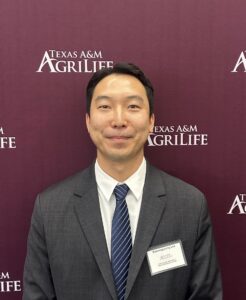
Dairy Soil & Water Regeneration (DSWR) is tapping into the talents of the best and brightest researchers in the U.S. They’re doing work through eight research institutions in major dairy-producing regions across the country. One of these all-important project partners is Myeongseong Lee, a postdoctoral research associate at Texas A&M AgriLife Research.
Tell us about you.
I originally grew up in South Korea, where my interest in animal agriculture began naturally through my appreciation for livestock production and the important role it plays in food systems. This interest led me to pursue animal science as my academic field.
During my undergraduate and master’s studies, I became especially interested in animal management and the environmental challenges associated with livestock production. This interest later led me to Iowa State University, where I worked as a research assistant in the Department of Agricultural and Biosystems Engineering. In that role, I had the opportunity to participate in and help lead several projects focused on manure management and odor mitigation in animal feeding operations.
Then, I further strengthened my expertise during my Ph.D. in animal science at Texas A&M University, where my research focused on improving the sustainability of livestock production systems by reducing environmental impacts, including ammonia emissions. This experience allowed me to connect scientific knowledge with the practical challenges faced by producers, which deepened both the relevance and applicability of my work.
Following my Ph.D., my postdoctoral research has allowed me to broaden my work beyond animal production systems by examining the beneficial use of livestock manure as a resource and its effects on greenhouse gases (GHG), soil health and crop production.
I feel truly grateful and fortunate to have had the opportunity to build scientific knowledge across animal production, air quality, manure management, soil and crop systems. At the same time, field-based research has helped me better understand the practical needs of the livestock industry. As a researcher, I hope to continue using these experiences to contribute to more sustainable, practical and science-based solutions for animal agriculture.
Describe your role in DSWR.
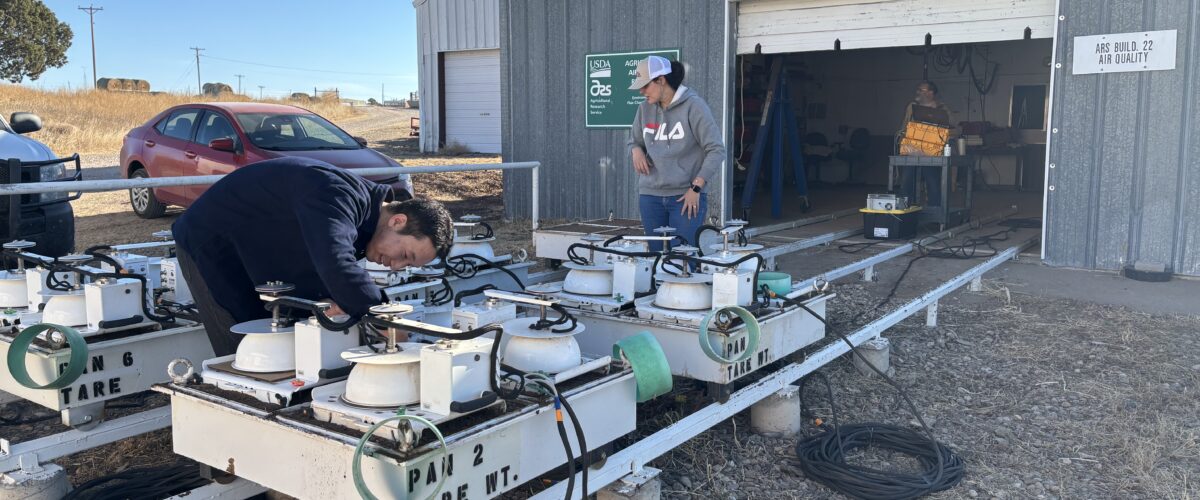
I joined the Texas DSWR research team in May 2025. My primary role is to lead GHG measurements and data analysis. In addition, I support our research team with a variety of field measurements and activities, including soil moisture monitoring using a neutron probe, soil water infiltration measurements, soil sampling and field operations such as manure applications.
What is the focus of your team’s research?
In the Southern High Plains of Texas, declining groundwater availability from the Ogallala Aquifer has increased the need for forage production systems to use limited water resources more efficiently while maintaining agricultural productivity and soil function.
The Texas DSWR team is evaluating how dairy manure management, tillage practices and other field practices affect soil health, GHG emissions, soil moisture, forage sorghum silage production and crop water use efficiency under water-limited conditions.
Specifically, we are comparing tillage and no-till systems, different manure management strategies including surface-applied manure, injected manure and evaporative manure, and other field practices such as the use of a wheat cover crop. The overall goal is to better understand how tillage practices and wheat cover crops, in combination with dairy manure and mineral nitrogen fertilizer management, influence soil health, GHG emissions, soil moisture dynamics, forage sorghum yield and crop water use efficiency in this semi-arid environment.
What have you learned so far?
The DSWR project has helped me better understand both the opportunities and challenges of crop production and soil health management in the Texas High Plains, where low precipitation, high evaporation, extreme temperatures and strong winds create difficult growing conditions.
One of the key lessons so far is that climate plays a major role in how management practices perform. In the drier year of 2024, the treatment system with a wheat cover crop showed greater soil moisture storage than the system without a cover crop. However, in 2025, higher pre-plant rainfall helped recharge soil moisture across all treatments, making differences among systems less noticeable.
We have also observed early changes in soil chemistry, including increased soil nitrate and slight decreases in soil pH following nutrient applications. These findings suggest that manure and cover crop management may provide some soil health benefits, especially in stable soil carbon and nitrogen, but may require longer-term repeated management before they become clearly measurable.
For GHG emissions, we have seen that emissions can vary from year to year depending on weather, soil conditions, crop growth and management practices. Overall, the soil has generally acted as a methane sink, removing more methane from the atmosphere than it emits, while carbon dioxide emissions have tended to increase during the growing season as crop growth and soil biological activity increase. Nitrous oxide emissions were usually low, but short-term peaks occurred after nutrient applications, showing the importance of measuring emissions soon after manure or fertilizer application events.
The project is still ongoing, and we will continue collecting data over the next two years. I hope these efforts will provide meaningful information for improving forage sorghum production under water-limited conditions.
I also think it is valuable that this project allows us to document how livestock manure management affects soil, water, crop production and GHG in a challenging but important agricultural region.
What excites you personally about your work on the project?
What excites me most is being part of a large, collaborative project with passionate researchers from different backgrounds and areas of expertise. I really enjoy the opportunity to discuss ideas, learn from others and see how each team contributes to the larger goals of the project. This is one of the reasons I always look forward to our annual team meetings and research updates.
From a research perspective, I am especially excited by the opportunity to evaluate dairy manure management from a whole-system perspective. This project allows us to look at soil health, water use, GHG emissions and crop production together, rather than focusing on only one part of the system.
I also think it is very meaningful that research teams from different regions are collecting comparable data under their own unique environmental conditions. This gives us a valuable opportunity to better understand how manure management and soil health practices perform across diverse agricultural systems.
Overall, I am grateful to be part of the DSWR project that combines strong science, teamwork and practical goals for improving sustainable agriculture.