Perspectives: Novel manure products provide potential fit in soil health systems
August 30, 2026
Bert Bock, Consultant to Dairy Management Inc., on nutrient management, agronomy and greenhouse gas footprint
The impact of novel manure products is an important part of the Dairy Soil & Water Regeneration (DSWR) project’s evaluation of soil health management systems for dairy forage production. While the project is not yet complete, the basic characteristics of these products suggest they may align with the needs of dairy forage systems.
Risk of losing nitrogen
The use of liquid dairy manure (LDM) as a fertilizer is a conventional practice for dairy farmers, providing nutrients necessary for forage crop growth. Its use, however, comes with environmental risks.
Unless the LDM is tilled into the soil soon after being applied to the surface of a field, much of the applied nitrogen can be lost through the rapid evaporation of ammonia nitrogen (volatized ammonia), which can form fine particulates in the atmosphere and be converted into nitrous oxide, a potent greenhouse gas (GHG). The loss of nitrogen also can reduce crop yield if not supplemented with additional fertilizer.
The evaporative and flocculated novel manure products being evaluated by DSWR theoretically have a low potential for ammonia loss, which may reduce or eliminate the need for tillage to prevent ammonia nitrogen loss.
Minimal soil disturbance is central to soil health management systems, which typically involve no-till or reduced tillage, e.g., strip tillage, and a cover crop. Injecting LDM below the soil surface is an alternative application method to tillage incorporation. This practice, which disturbs the soil less than tillage, does lower ammonia losses somewhat, but can increase nitrous oxide emissions and is a slower, costlier and more energy-intensive process.
Evaporative and flocculation processes
The evaporative process separates water and ammonia from the solids in LDM, converts the ammonia to a more stable form of nitrogen and concentrates that nitrogen to about 10% in a liquid fertilizer. During the flocculation process, phosphorus-rich cake is separated from most of the LDM water and ammonia using a chemical additive. Since almost all the ammonia is separated from the solids during both processes, the potential for ammonia loss from the separated solids is also low.
In addition to having a low potential for ammonia loss, the LDM phosphorus is concentrated in the low-volume separated solids that can be exported off dairy farms, which may reduce the potential for the over-application of phosphorus and subsequent water quality impacts on farms.
Being in a solid form, the solids from both processes can be practically stored until the optimum time for field application to potentially minimize run off into waterways. The nitrogen-rich liquid stream from the evaporative system can also be stored until optimum time for application.
The evaporative and flocculation systems are in early stages of commercialization. Wider farm adoption may depend on economies of scale and the development of markets for ecosystem services at a time when farmers, processors and food companies are increasingly focused on environmental stewardship.
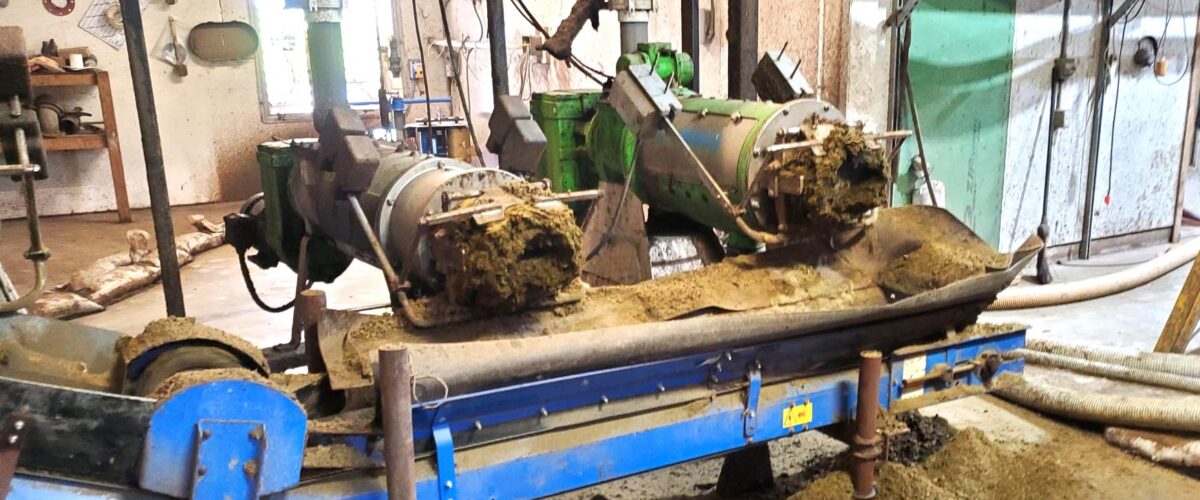
Image: Blue Spruce Farm in Vermont uses dissolved air flotation, a type of flocculation process, to remove and recover suspended solids from manure at the dairy.