In the Spotlight: Meet Joshua Faulkner, researcher at University of Vermont
November 19, 2025
 Dairy Soil & Water Regeneration (DSWR) is tapping into the talents of the best and brightest researchers in the U.S. They’re doing work through eight research institutions in major dairy-producing regions across the country. One of these all-important project partners is Joshua Faulkner, research associate professor at the University of Vermont (UVM). Faulkner also coordinates the Farming and Climate Change Program at the UVM Extension Center for Sustainable Agriculture.
Tell us a little about you.
I grew up on a small beef farm in southern West Virginia. I studied biosystems engineering at Virginia Tech, with a focus on soil and water resources. I then went on to Cornell University for my M.S. and Ph.D. in biological and environmental engineering. I first started working on dairy farms during my doctorate research when I studied vegetative treatment areas for silage bunker runoff.
I feel lucky to have been able to stay in the Northeast by finding a position at the University of Vermont. I love the winters and the ability to ski right out my back door.
What is your role in DSWR?
I lead the DSWR research happening in Vermont. We have an incredible team here, with complementary skills and expertise. I focus primarily on the water quality aspects, and we have others on the team that are experts in greenhouse gas (GHG) measurement.
What is the focus of your team’s research?
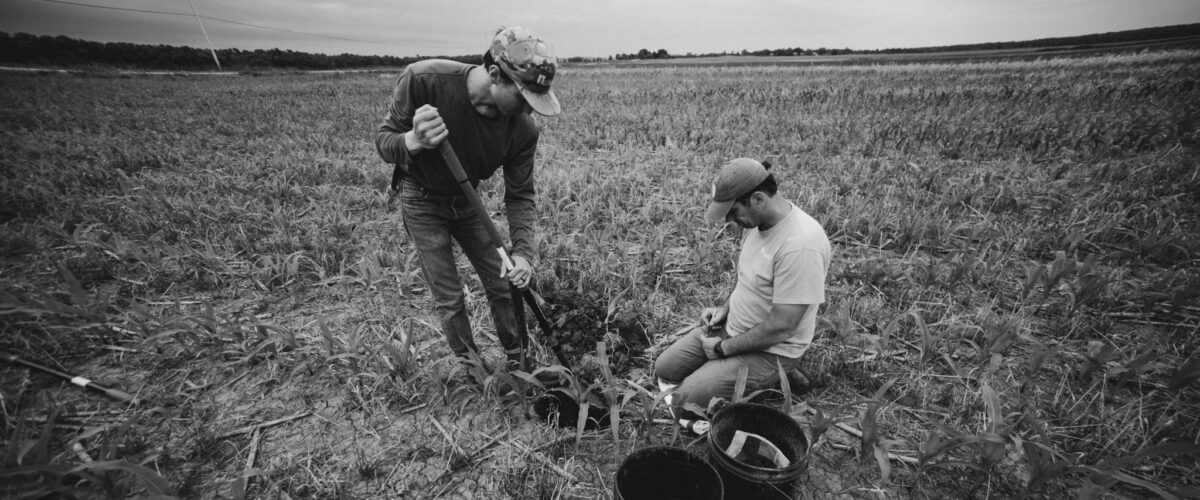
We are studying GHG emissions, soil health implications, and water quality effects of corn silage production in trials on two commercial dairy farms. Specifically, we are comparing a conventional system (tillage, surface spread manure, and no cover crop) to a soil health management system (no-till, manure injection, and cover crop). Water is a major focus for our team. Our site is unique in the sense that we not only monitor water quality in surface runoff, but we also monitor subsurface runoff from tile drainage systems in our study fields. In addition, our GHG measurements are targeted at low versus high locations in the fields, which are distinctly different in terms of soil moisture.
What have you learned so far?
This research has continually reminded me of how farms are being negatively impacted by weather extremes. In the past three years, we have experienced both the wettest and driest summers on record at our field site in Vermont. This has been extremely challenging for the farm and has also forced us to adapt our research methods. I think it is important that we have been able to measure and document production and environmental impacts of a changing climate in our region.
What excites you about your work on the project?
This project is the first that I know of in our region that has taken such a whole systems approach to understanding a major shift in management practices. Oftentimes projects measure one or two things, but it is rare to be able to measure soil, water, GHGs and production aspects. This will help us understand where there are synergies and/or potential tradeoffs among these factors.