Researchers in Vermont highlight different dimensions of DSWR at Ecological Engineering Society conference
June 22, 2026
Researchers at the University of Vermont are spreading the word about studies connected to the Dairy Soil & Water Regeneration (DSWR) project.
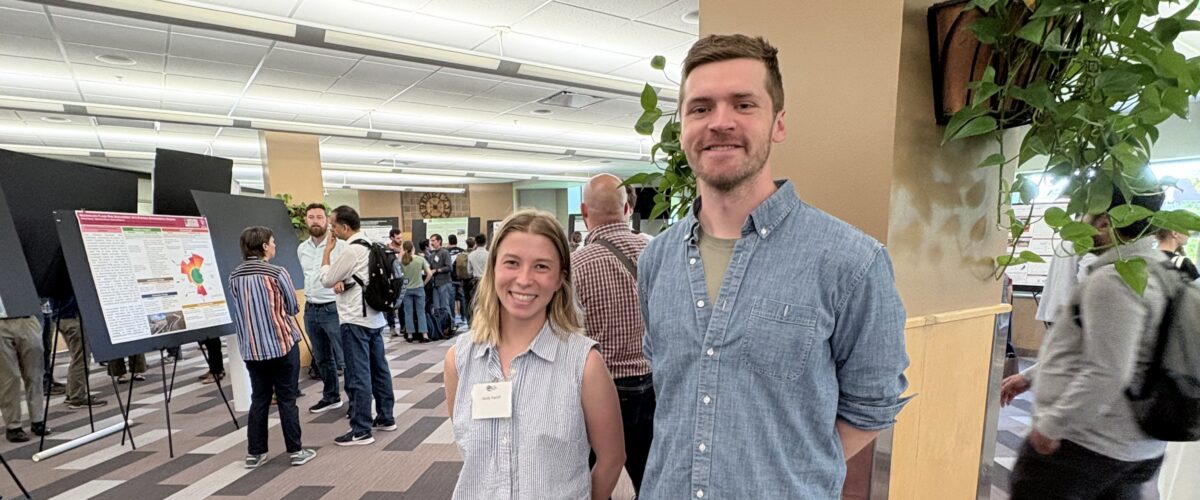
Research specialist Molly Ratliff and postdoctoral researcher Adrian Wiegman shared insights at the American Ecological Engineering Society’s Annual Meeting in June. The conference was hosted by the University of Vermont, which is one of eight research institutions around the country participating in DSWR, an eight-year project being conducted on working dairies and research farms. Ratliff presented a poster, and Wiegman delivered a formal presentation, each highlighting a different dimension of ongoing DSWR research in Vermont.
Ratliff’s presentation compared nitrogen cycling and nitrous oxide emissions following land application of two novel manure products recovered from the flocculation process: liquid manure effluent and solids (or flocs). Both products are generated at a dairy farm participating in the DSWR project. The flocculated solids exhibited lower overall nitrous oxide emissions than the liquid manure treatments, likely due to lower nitrogen application rates and less immediately available inorganic nitrogen in the solid product, Ratliff said.
Wiegman presented preliminary results from an end-member mixing analysis examining hydrological processes at a DSWR water quality monitoring site. The model uses electrical conductivity measured by sensors installed in drainage outlets as an indicator of soil-water contact time and applies a digital filtering algorithm to distinguish preferential and soil matrix flow. This modeling builds on prior work in tile-drained agricultural systems but represents a more streamlined and scalable approach.
Ratliff and Wiegman are now collaborating to connect the mixing analysis with soil moisture sensors in the field to learn how water movement and storage differ between fields managed with conventional practices and those using soil health management systems. While still in development, this work demonstrates how existing sensor infrastructure from the DSWR project can be leveraged to answer questions about how management practices influence hydrology.
It was exciting to bring data from the DSWR project to a national ecological engineering audience, the researchers said.
“The society’s annual meeting provided an opportunity to connect and learn not only with agricultural researchers, but also water quality scientists, systems modelers and engineers,” Ratliff said.
“From advancements in wastewater treatment to in-field sensor networks,” Wiegman said, “the conference was a reminder of the wide relevance of DSWR research.”