Site Drop-in: Idaho team identifies benefits of novel manure solids
January 19, 2026
Eight institutions are conducting research in various dairy-producing regions of the country as part of the Dairy Soil & Water Regeneration (DSWR) project. The semi-arid Snake River Valley in southern Idaho, the third-largest milk producing state, is one of the settings.
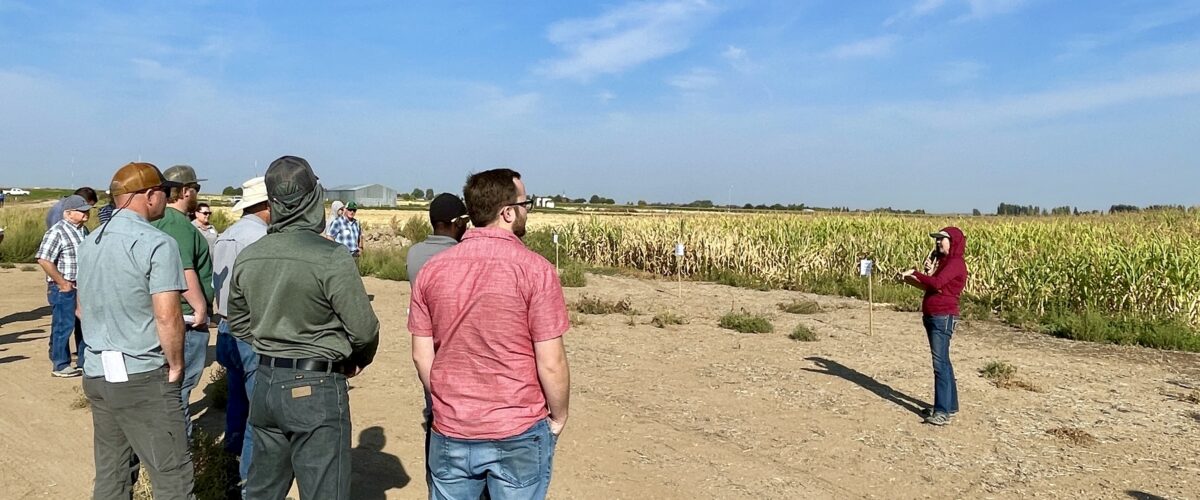
Soil chemist April Leytem, formerly with USDA, led the research at the agency’s Agricultural Research Service site in Kimberly, Idaho. This past fall, she and her team wrapped up five growing seasons of field trials exploring the effects of two novel manure-based products (evaporative and flocculated solids) in soils with and without prior manure application in a corn silage-triticale rotation. They also conducted a two-year study evaluating the nitrogen fertilizer replacement value of traditional dairy manure and the new manure products.
Leytem provided an update on the work there.
What have you learned about the novel manure products you’ve tested?
Generally, we’ve learned that these products are excellent sources of fertilizer for our cropping rotation here in Idaho. They enhance uptake of nitrogen, phosphorus and soil micronutrients compared to using commercial fertilizers alone. This enables a larger removal of nutrients from the field, which helps farmers with their nutrient management plans. More broadly, we’ve seen that the addition of manure, whether it’s one of the novel products or traditional manure, enhances soil health. By increasing soil carbon and also increasing microbial activity in the soils, the addition of manure is a win-win because the crops can utilize those nutrients really well in the soil, and it stimulates the soil microbiome and helps enhance overall nutrient cycling in these systems.
What has the nitrogen replacement study shown?
We looked at novel manure products, in addition to manure that would traditionally be applied to fields in our region, and compared that to commercial fertilizer applied at various rates. Our aim was to learn the actual replacement value of a manure for fertilizer in terms of how much nitrogen the crops take up. This can help farmers assess the real value of these in a commercial market. What we found is that in the first year after applying manure, the crop responded well to the added nitrogen with fertilizer and the traditional manure and manure products, resulting in higher yields. However, all manure treatments boosted yields above that seen with synthetic fertilizer only, regardless of how much nitrogen was added, suggesting that manure provides benefits beyond just nitrogen.
What benefits do you see from DSWR being conducted on a wide scale around the country?
One of the great things about DSWR is that it’s a multi-location project with a wide variety of scientific collaborators who are focused on different aspects of the research. This is valuable for producers because we can provide information about dairy production systems in various regions with differing climates and production strategies. It’s also nice from a scientific standpoint that we are able to work with people with different skills that we may not normally be collaborating with, and we learn a lot from each other about what works and doesn’t work in certain regions. In terms of the research itself, our collaboration also could lead to improvements in experimental methods.
How will this benefit farmers?
The goal of this research is to help farmers better understand how they might use these manure products in their cropping systems to produce forages. For example, how much should they apply? When would they expect nutrients to become available? How much nutrient uptake could they expect? It will also enable farmers to do a better job managing their nutrients on-farm. This can be a challenge for farmers, especially when having to transport manure long distances. These innovative manure product technologies help condense nutrients down to a more transportable form that is easier to apply.
What comes next?
2025 was the last year of trials in Kimberly. Now, we’re focused on writing up the results, completing the analysis and coordinating with our collaborators at the different research sites to see if the data can be used in a larger context to help understand regional differences between these dairy production systems.