Site Drop-in: Platteville research team zeros in on runoff, erosion, nutrient loss
December 9, 2025
Eight research institutions across the country are participating in the Dairy Soil & Water Regeneration project. University of Wisconsin-Platteville senior scientist Dennis Busch provided an update on what’s happening at the university’s Pioneer Farm.
Research focus: At UW-Platteville we are evaluating two dairy-focused crop production systems. One is a soil health management system (SHMS) where a corn silage crop is fertilized via surface-broadcast using a flocculated solids manure product, supplemental nitrogen is applied according to a soil N test and cover crops are established immediately after harvest. The second system is a conventional system in which the corn silage crop is fertilized with fall-injected liquid dairy manure, supplementary N needs are met by a spring urea application followed by disk incorporation and no cover crops are planted.
We are evaluating the impact of these production systems on soil health, water quality, carbon storage and crop yield.
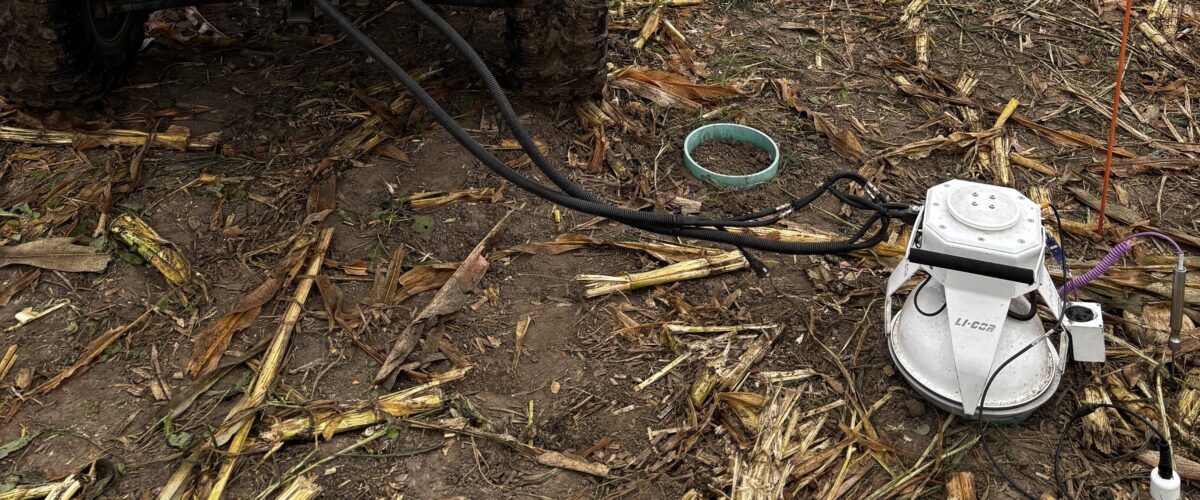
What’s happening now: It was a busy fall. In September, we measured forage yield, harvested corn silage, collected silage samples, applied liquid dairy manure to the conventional plots, and drilled cover crops in the SHMS plots. In addition, we continue to collect water samples from our network of soil lysimeters (a tool used to measure water and nutrient movement in the soil) every month and measure carbon dioxide soil emissions every two weeks.
General findings to date: The preliminary data indicates that there is no significant difference in corn silage yield between the two production systems. However, the SHMS has significantly less surface water runoff, soil erosion and nutrient loss than the conventional system. For example, in 2025, surface water runoff from the conventional plots was 0.94 inches compared to only 0.08 inches from SHMS plots. In the same year, total phosphorus measured in runoff from conventional plots was 1.4 pounds per acre compared to 0.05 pounds per acre measured in SHMS plots. Also, this year soil erosion from conventional plots averaged 1,500 pounds per acre which was significantly higher than the 27 pounds per acre average measured in the SHMS plots.
Key challenge: One of the most significant challenges we have faced on this project is the coordination of agronomic activities. We hire outside contractors to plant corn, apply manure, harvest corn silage and establish cover crops. It can be challenging to coordinate these field activities to ensure that practices are conducted according to research protocols and are completed on time.
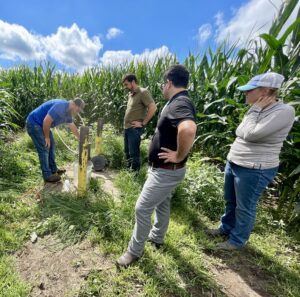
Key success: Monitoring surface water runoff at the edge-of-field requires significant dedication. The timing of events is unpredictable; they frequently occur in the evening or on weekends. The key to our success in collecting this data is having staff on-call 24/7 to monitor events and troubleshoot equipment if necessary. We are fortunate to have dedicated staff and students who are highly skilled and dependable to monitor runoff events.